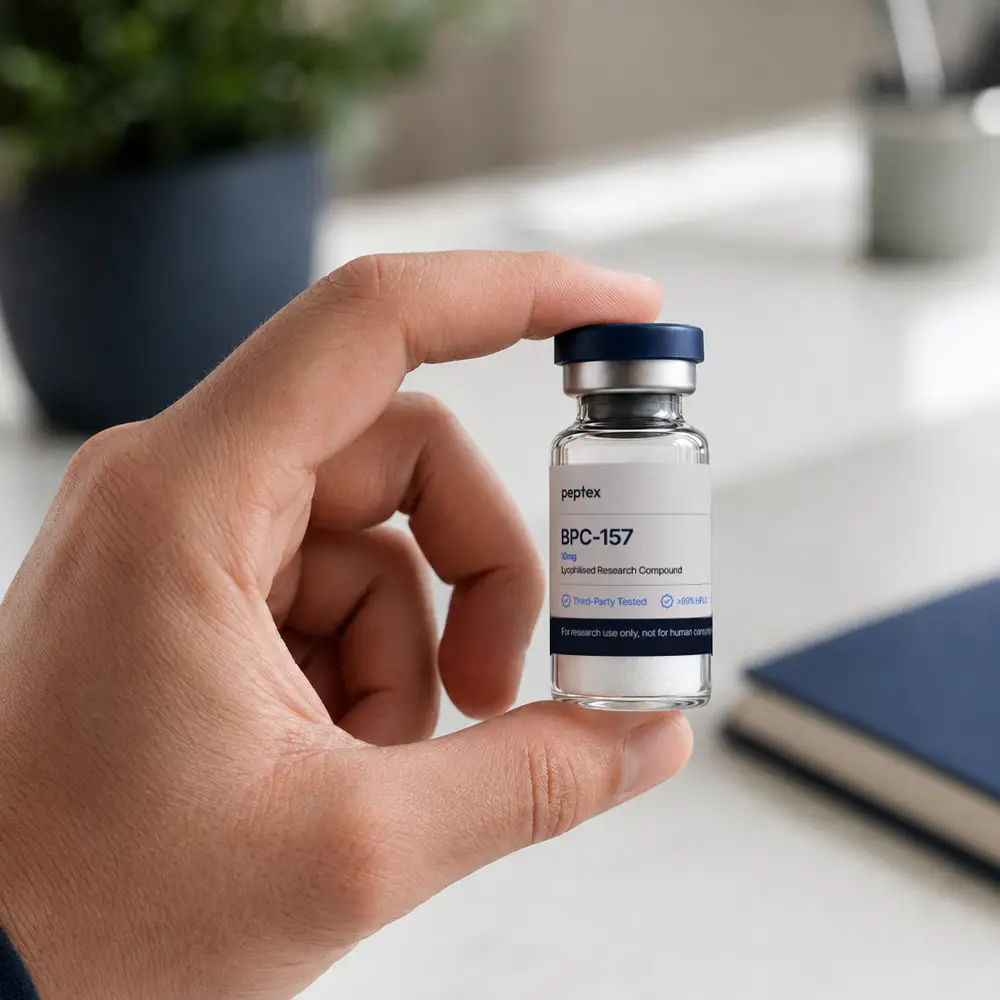
Explore the latest BPC-157 research, including recent scientific studies, proposed mechanisms of action, current evidence and the limitations of existing laboratory research.
What Does the Latest Research Actually Show?
BPC-157 remains one of the most widely discussed experimental peptides within regenerative biology. Research activity has covered tissue repair models, angiogenesis, inflammatory signalling, gastrointestinal protection, tendon and ligament models, muscle regeneration and cellular recovery pathways.
However, the current evidence base remains heavily weighted towards laboratory and animal studies. At present, BPC-157 should be viewed as a research compound only, not as an approved therapeutic product.
Quick Research Summary
- Research status: Preclinical and investigational
- Human evidence: Extremely limited
- Regulatory approval: Not approved for clinical use
- Main research areas: Tissue repair, angiogenesis, inflammation, gastrointestinal models and musculoskeletal research
What Is BPC-157?
BPC-157, also known as Body Protection Compound-157, is a synthetic peptide made up of 15 amino acids. It was originally derived from a protective protein sequence identified in gastric juice and has since been investigated across a wide range of experimental models.
Researchers are interested in BPC-157 because it appears to interact with multiple biological signalling pathways rather than acting through one single mechanism.
Major 2025 Research Review
A 2025 systematic review examined the available literature on BPC-157 in orthopaedic and musculoskeletal research. The review screened published papers from 1993 to 2024 and found that most available evidence came from preclinical models.
The review reported research findings across tendon, ligament, muscle and bone injury models, with several studies observing changes in tissue organisation, healing markers and biomechanical outcomes.
Importantly, the authors also highlighted that human evidence remains extremely limited and that further controlled research is required before any firm conclusions can be made outside laboratory settings.
How Researchers Believe BPC-157 Works
Angiogenesis
Several studies suggest that BPC-157 may influence pathways involved in angiogenesis, the formation of new blood vessels. This is relevant in experimental repair models because vascular activity plays an important role in tissue maintenance and recovery biology.
Inflammatory Signalling
Laboratory studies have also explored the effect of BPC-157 on inflammatory signalling. Researchers are investigating whether changes in cytokine activity and related pathways may contribute to the effects observed in controlled injury models.
Cell Migration and Collagen Organisation
Preclinical research has examined possible interactions with fibroblast activity, collagen formation, cell migration and growth factor signalling. These areas remain under investigation and should not be interpreted as confirmed clinical effects.
Current Areas of Research
Musculoskeletal Models
Musculoskeletal research remains one of the largest areas of BPC-157 investigation, particularly in tendon, ligament, muscle and bone models.
Gastrointestinal Models
Because BPC-157 was originally linked to gastric protein research, gastrointestinal protection and tissue integrity remain active areas of study.
Neurological and Vascular Research
Emerging studies are also exploring possible roles in nerve-related models, endothelial function and vascular signalling pathways.
Research Limitations
Although BPC-157 has been widely studied in experimental settings, there are still major limitations in the current evidence base.
- Most published studies are laboratory or animal studies.
- Human clinical research remains very limited.
- There are no large randomised controlled trials establishing clinical efficacy.
- Long-term safety has not been established for human use.
- No approved dosing protocol exists for clinical application.
Key Takeaways
BPC-157 remains an interesting investigational peptide within regenerative and tissue biology research. Current studies suggest activity across several experimental pathways, including angiogenesis, inflammatory signalling and musculoskeletal repair models.
However, the evidence remains preclinical. Findings from laboratory and animal studies should not be treated as proof of clinical benefit, and further controlled research is required before broader conclusions can be drawn.
Research Use Only Statement
BPC-157 supplied by Peptex is intended for laboratory research use only. It is not intended for human consumption, medical use, veterinary use, diagnostic use or therapeutic application.
References
- Vasireddi N. et al. (2025). Emerging Use of BPC-157 in Orthopaedic Sports Medicine: A Systematic Review.
- Łukasiak et al. (2025). Multifunctionality and Possible Medical Application of the BPC-157 Peptide.
- BPC-157 as an Investigational Peptide Therapeutic: Biopharmaceutical Challenges, Formulation Strategies, and Translational Development Barriers (2026).